

Revisiting the Jerusalem Market


Twice in the past, in 2022 and 2023, FCC staged a Vacation Bible School that involved everyone in the church. We called it the Jerusalem Market. The idea was to recreate what life was like in Jerusalem during Jesus' time, as best we could with the available resources. We set up market stalls selling wares and conducting government business in the fellowship hall. Adult volunteers appeared in costume to run the stalls and teach children about life in the first century, incorporating Bible lessons as appropriate. Some characters were straight from the Bible, like Nicodemus, Photine, and Lydia. Some lessons incorporated crafts or food tasting for the kids.

In addition to market hours, the children enjoyed the usual games, songs, and food that comes with VBS and lessons that prepared them for the market.

The spice and fish shop had an array of herbs, spices, and oils the kids could smell and sometimes taste. The sardines were surprisingly popular.

The Pharisee Nicodemus was visible at all points of the market, and gave lessons in the temple (another room).

Jerusalem had a farm supply store, of course, where you could purchase livestock, feed, and eggs. For us it was a petting zoo.

The tax office was manned by a tax collector and guarded by Roman soldiers. A lot of "gold" coins were collected.

The soldiers also harassed people all over town.

Photine was a name later given to the woman at the well, a Samaritan whose life was changed by Jesus. She was glad to share her story to anyone who came by the well.

The food store was very popular. The kids could sample grapes, olives, and other fruit, plus homemade cheese, olive oil, and leavened and unleavened bread, plus learn about their importance.

The jewelry shop was high class, and children could string beads to make their own jewelry.

Caning was an important skill for making furniture, baskets, and other lightweight objects that had to last.

Lydia, the seller of purple cloth, required a stretch of imagination, since her appearance in the Bible was later and she wasn't in Jerusalem. But she had a great story.
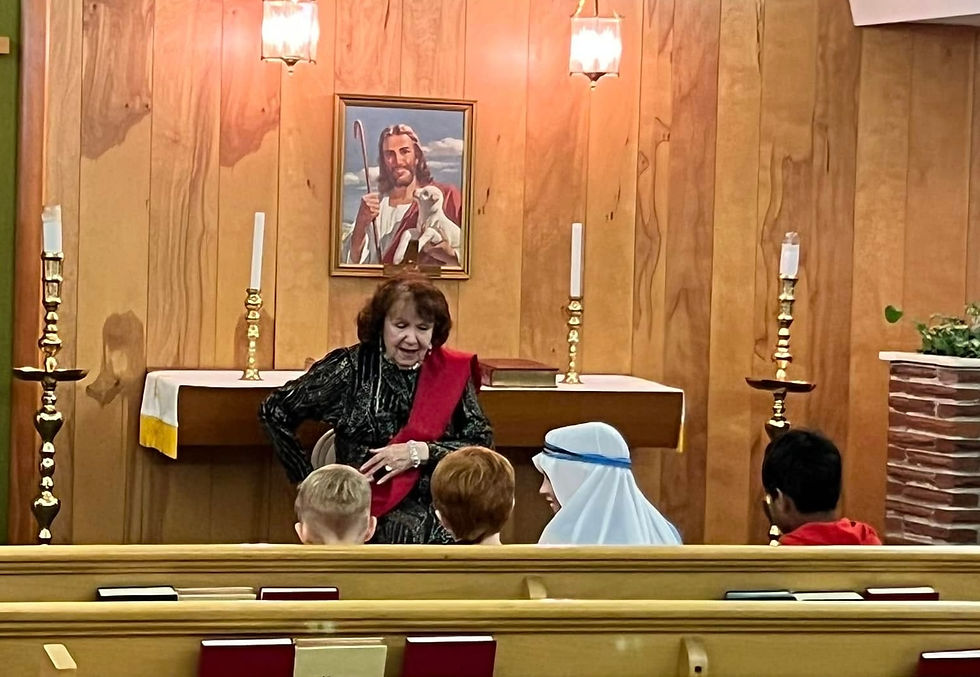
The storyteller didn't charge for her services, but was an important part of passing along the culture.

Leather goods were important in a time before plastic, and at the leather shop, participants crafted their own embossed leather tags.
Kids moved in groups from stall to stall, filling out their forms to make sure they didn't miss any. They also got lessons and stories from costumed characters in other rooms to learn about first century life. Besides the folks who manned the stalls, other volunteers shepherded the children through off-market lessons, prepared food, decorated, and contributed items to fill the market. It took a lot of people to pull this off, but it was a lot of fun for us all. We hope to do it again sometime!


Comments